
Molecular Sieve Guides for Selection, Design and Operation
Articles and engineering guides on how molecular sieve works, how the grades compare and how beds are run.
Quick Answer
Molecular sieve guides from SorbiTech explain what the adsorbent is and how the four grades compare with each other, with silica gel and with activated alumina. The four grades, 3A, 4A, 5A and 13X, differ in pore width from about 3 Å to about 10 Å. Five engineering guides cover bed design and operation.
- Grades 3A, 4A, 5A and 13X
- Beads and pellets
- Manufactured by Medaad
Articles and Engineering Guides
The five guides are also grouped under engineering guides, and the duties they serve under applications. Grade data sits under zeolite grades. Filter by type below.
 Basics
What Is a Molecular Sieve
A plain guide to molecular sieve, the zeolite crystal with pores of one fixed size, how it holds water and where industry uses it Read the article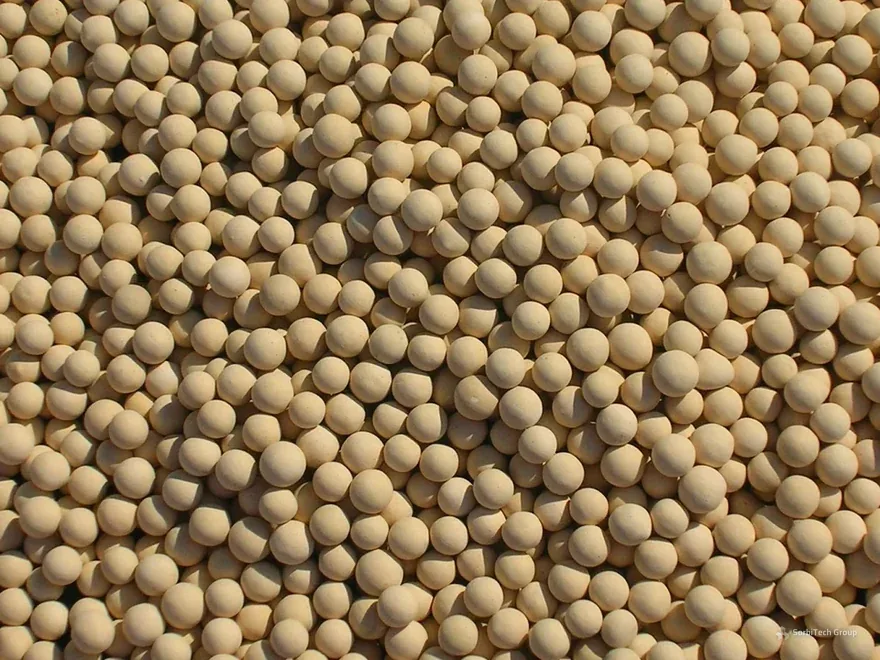 Basics
Molecular Sieve Glossary
Plain definitions of the adsorption, drying and bed design terms used in the guides, from 3A to zeolite, each with its own anchor link Open the glossary Comparison
3A vs 4A vs 5A vs 13X
How pore width separates 3A, 4A, 5A and 13X molecular sieve, what each grade holds and keeps out, and how to choose Read the article Comparison
Molecular Sieve vs Silica Gel
Molecular sieve and silica gel compared by humidity, dew point, temperature and regeneration heat, and how the two work together in one bed Read the article Comparison
Molecular Sieve vs Activated Alumina
Activated alumina carries bulk water and tolerates wet feeds, while molecular sieve reaches far lower dew points. Many dryers load both in layers. Read the article Engineering Guide
Types and Grade Selection
Choose a molecular sieve grade from the molecule that must stay in the stream, then the narrowest pore that admits the contaminant, step by step. Read the guide Engineering Guide
Bed Design for Dryers
How a molecular sieve dryer bed is sized, from water load and design capacity to pressure drop, mass transfer zone, guard layers and cycle time. Read the guide Engineering Guide
Regeneration Temperature and Cycle
Why molecular sieve beds are heated with dry purge gas, the typical temperature for each grade and duty, and how heating, hold and cooling are run Read the guide Engineering Guide
Loading and Replacement
How to tell a molecular sieve charge is spent, and how a change out runs from safe unloading through support balls and loading to dry out Read the guide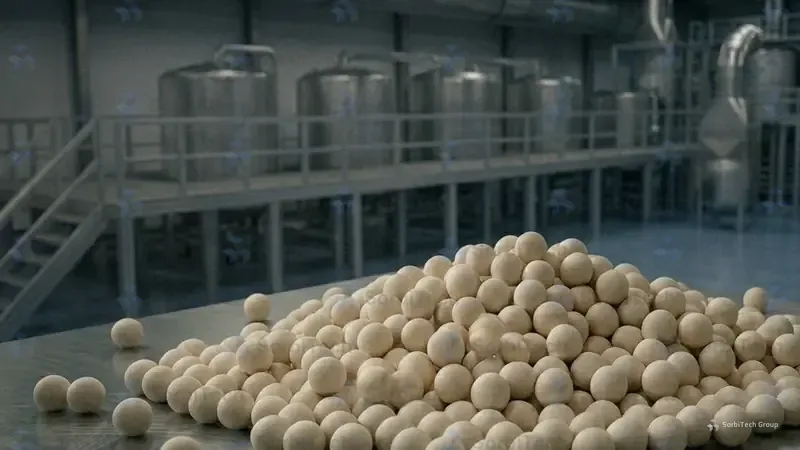 Engineering Guide
Service Life and Dusting
What wears out a regenerated molecular sieve bed, from steaming and coking to liquid carryover, where dust comes from and how plants extend charge life Read the guideQuestions on the Molecular Sieve Articles
Which article should I read first?
Start with what a molecular sieve is for the basics, then 3A vs 4A vs 5A vs 13X to narrow the grade. The engineering guides follow once a grade is chosen.
What is the difference between an article and an engineering guide?
Articles explain the material and compare it with other adsorbents. Engineering guides each take one design decision on a working unit, such as bed sizing, regeneration or change out.
How do molecular sieve, silica gel and activated alumina differ?
Molecular sieve is a crystal with one pore width and dries gas to the lowest dew points. Silica gel carries more water in humid conditions and regenerates with milder heat. Activated alumina handles bulk water and wet feeds. Many dryers use two of them in layers.
Do the comparisons favour one adsorbent?
No. Molecular sieve, silica gel and activated alumina each suit different duties, and the comparisons show where each one fits. Medaad, the group manufacturer, makes all three.
Do the articles cover pressure swing as well as thermal swing beds?
Yes. The regeneration guide covers heated thermal swing beds and heatless pressure swing dryers, and the introduction to molecular sieve explains both modes of bed operation.
Ask About a Specific Duty
If an article or guide does not answer your question, send it to SorbiTech with the process data. A useful enquiry names the stream and its main components, the water or contaminant level at the inlet, the outlet target, and the flow, pressure and temperature. If a bed is already in service, add the present adsorbent, the cycle and what the plant is seeing. The adsorbent itself is made by Medaad, the group manufacturer.